Floristic Guide to the Conservation Areas – Arbofino Company – Pichincha Canton, Manabí Province, Ecuador
DOI:
https://doi.org/10.54753/blc.v16i1.2608Keywords:
floristic guide, conservation, forests, reforestation, treesAbstract
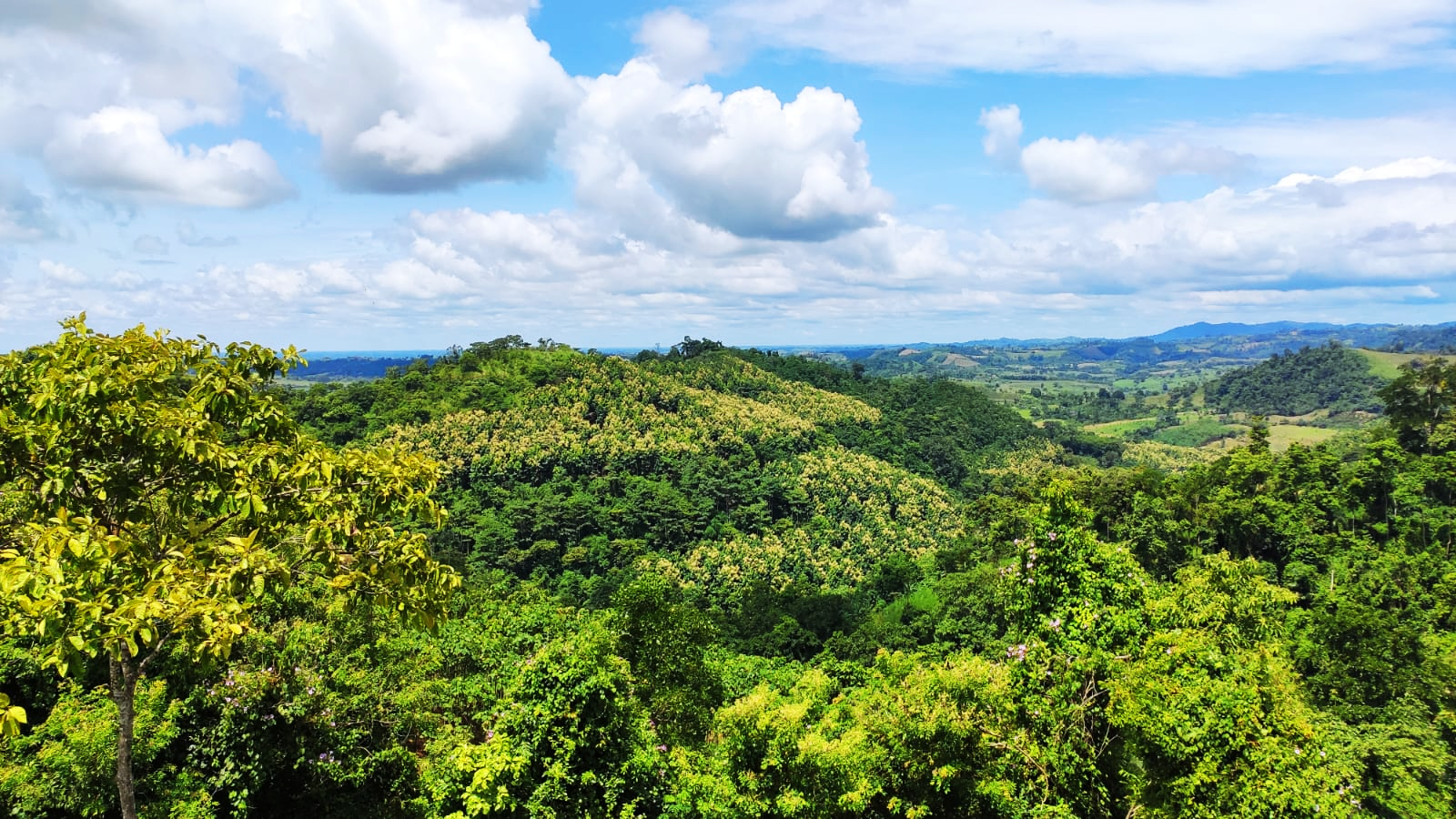
Between 2021 and 2024, botanical expeditions were carried out on the farms and reserves of the company Arbofino to record floristic information, based on all life forms of the species and the different types of vegetation cover present in the study area, such as secondary forests, riparian forests along the Daule River, and ecological succession zones. Arbofino, located in the Pichincha canton of Manabí Province, Ecuador, is a company dedicated to the sustainable plantation of Tectona grandis (teak), forest conservation and reforestation, as well as the organic agricultural production of Theobroma cacao (cacao).References
Dodson, C. H., Gentry, A. H., & Valverde, F. M. (1985). La flora de Jauneche: Los Ríos, Ecuador. Quito: Banco Central del Ecuador
Gentry, A. (1993). A Field Guide to the Families and Genera of Woody Plants of Northwest South America
(Colombia, Ecuador, Perú). Washington, DC. ISBN 1-881173-01-1
Jørgensen, P. & León-Yánez, S. (1999). Catalogue of Vascular Plants of Ecuador. Missouri Botanical
Garden. San Louis. Missouri. USA.
León-Yánez S. Valencia R. Pitman N. Endara L. Ulloa Ulloa C. & Navarrete H. (2011). Libro Rojo de las
Plantas Endémicas del Ecuador. 2ª edn. Publicaciones del Herbario QCA. Pontificia Universidad
Católica del Ecuador. Quito.
Ministerio del Ambiente del Ecuador. (2013). Sistema de Clasificación de los Ecosistemas del Ecuador Continental. Subsecretaría de Patrimonio Natural. Quito.
Tropicos.org/home.(https://www.tropicos.org/home) [acceso 20.10.2025]
World Flora Online Plant List. (2022). Explore the data. https://wfoplantlist.org/plant-list/
Published
How to Cite
Issue
Section
License
Copyright (c) 2025 Amarú Ramón Salcedo, Edison García, Paolo Piedrahita, Nelson Jaramillo Díaz

This work is licensed under a Creative Commons Attribution-NonCommercial-ShareAlike 4.0 International License.
This work is published under the Creative Commons Attribution-NonCommercial-ShareAlike 4.0 International (CC BY-NC-SA 4.0) license. This means that users may copy, distribute, and adapt the content, provided that proper credit is given to the authors and the journal. Commercial use of the material is not permitted. Additionally, any derivative work must be distributed under the same license. This license ensures open access to knowledge, promoting the dissemination and reuse of published works for non-commercial purposes, respecting authorship, and ensuring the free circulation of content under fair terms.