
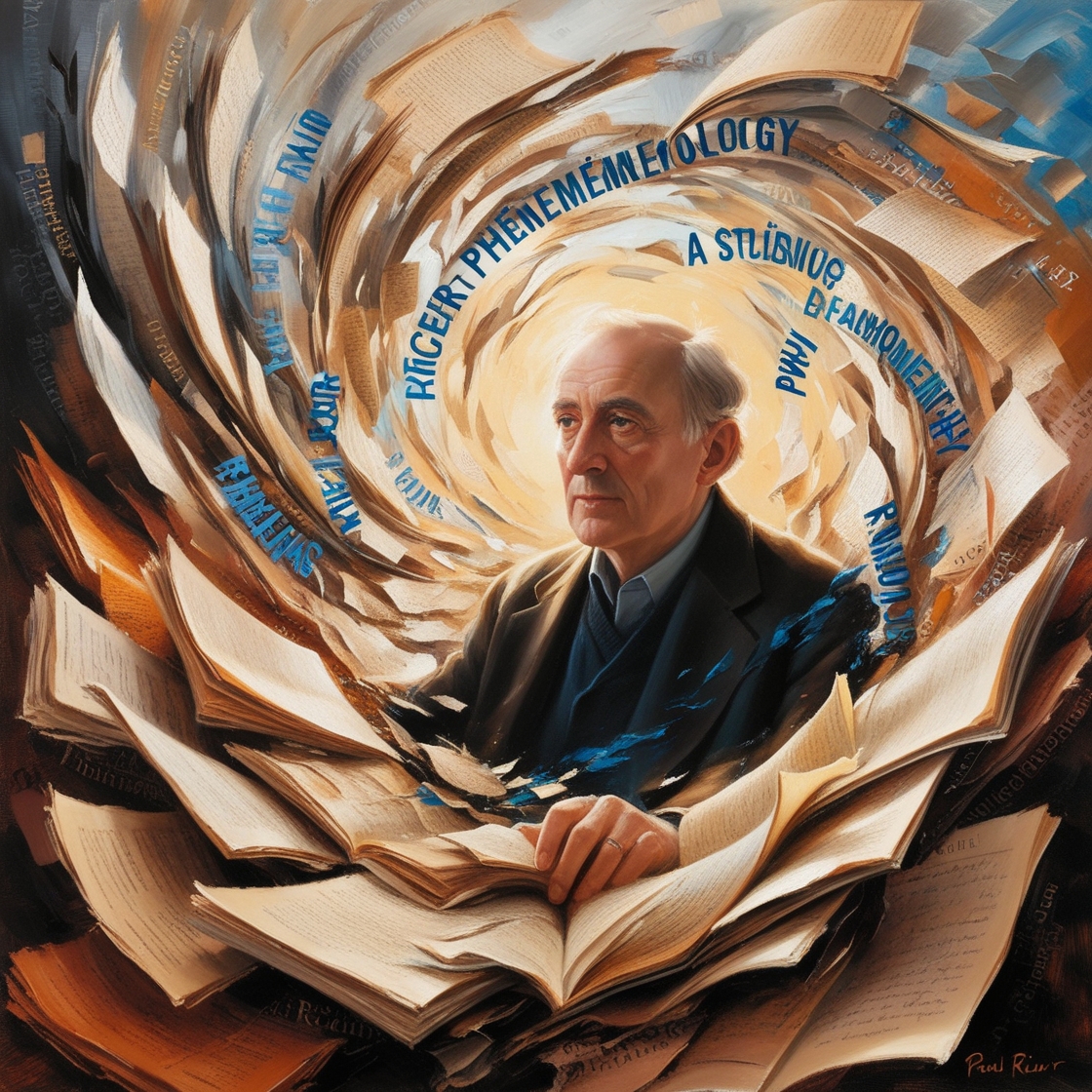
Paul Ricœur y el texto o el giro hermenéutico de la fenomenología
DOI:
https://doi.org/10.54753/eac.v13i2.2217Palabras clave:
fenomenología, hermenéutica, filosofía, giro hermenéutico, interpretaciónResumen
En este trabajo, se analizará la propuesta del girohermenéutico en la fenomenología de Ricoeur. Nosocuparemos, en particular, de la figura del “texto”dentro de la propuesta del filósofo francés, pues allíparece posible reconocer su distanciamiento de lateoría husserliana y hacer una lectura sistemática desu propuesta. En esta aproximación al “texto”, nospropondremos una reflexión sobre la temporalidady la cuestión de la trama, en tanto estructura deaquello que puede relatarse, pues aparecen comoelementos constitutivos, no solo de la propuesta deRicoeur, sino de la hermenéutica como alternativaa las limitaciones de la fenomenología en aquelloque Ricoeur entiende como “idealismo husserliano”.Cabe señalar que nuestro estudio estará centrado,mayoritariamente, en el libro Del texto a la acciónde Paul Ricoeur y, por lo tanto, habrá ciertosconceptos que se maticen ceñidos a esa obra.Citas
Berciano, M. (1992). ¿Qué es realmente el Dasein en la filosofía de Heidegger? Thémata. Revista de Filosofía, 10, 435-450. https://institucional.us.es/revistas/themata/10/04%20berciano.pdf
Blanco Ilari, J. I. (2005). La fenomenología hermenéutica de la persona según Paul Ricoeur. Revista de Filosofía y Teoría Política, 36, 29-52. https://www.memoria.fahce.unlp.edu.ar/art_revistas/pr.632/pr.632.pdf
Gadamer, H. (2017). Verdad y método. Ediciones Sígueme.
Grondin, J. (2019). Paul Ricoeur. Herder Editorial.
Grondin, J. (2008). ¿Qué es la hermenéutica? Herder Editorial.
Heidegger, M. (2000). Los problemas fundamentales de la fenomenología. Editorial Trotta.
Husserl, E. (2015). La idea de la fenomenología. Fondo de Cultura Económica.
Husserl, E. (1999). Investigaciones lógicas 1. Alianza Editorial.
Lambert, C. (2006). Edmund Husserl: la idea de la fenomenología. Teología y vida, 47(4), 517-529. https://dx.doi.org/10.4067/S0049-
Lythgoe, E. (2014). Comentarios bibliográficos. Revista latinoamericana de filosofía, 40(1), 112–115. https://rlfcif.org.ar/index.php/RLF/article/view/107
Marenghi, C. (2017). La hermenéutica en Paul Ricoeur. Studium. Filosofía y Teología, 20(39), 55-89. https://revistas.unsta.edu.ar/index.php/Studium/article/download/301/319
Méndez A., G. E. (2014). Fenomenología – hermenéutica en Paul Ricoeur. una integración para el abordaje de lo real. Revista Gaceta de Pedagogía, 33, 85-101. https://revistas.upel.edu.ve/index.php/gaceta/article/download/531/491/1048
Encyclopaedia Herder. (2017). Dasein. Herder Editorial.
Ricoeur, P. (2002). Del texto a la acción. Ensayos de hermenéutica II. Fondo de Cultura Económica.
Ricoeur, P. (1988). Lo voluntario y lo involuntario. Docencia.
Ricoeur, P. (1997). Fenomenología y hermenéutica. Cuaderno Gris [Monográfico: Horizontes del relato: lecturas y conversaciones con Paul Ricoeur. Coordinador Gabriel Aranzueque]. Época III(2), 25-48. https://repositorio.uam.es/handle/10486/294
Rodríguez, R. (2015). Fenómeno e interpretación. Ensayos de fenomenología hermenéutica. Editorial Tecnos.
Szeftel, M. (2015). La temporalidad de la historia en la fenomenología de Edmund Husserl: hacia una comprensión de la función de la reinstitución. Investigaciones fenomenológicas, 12, 185-206. https://dialnet.unirioja.es/descarga/articulo/7437758.pdf
Vergara Anderson, L. (2005). Paul Ricoeur (1913-2005). Historia y Grafía, 24, 241-248. https://www.redalyc.org/articulo.oaid=58922830009
Publicado
Cómo citar
Número
Sección
Licencia
Derechos de autor 2024 Educación, Arte, Comunicación: Revista Académica e Investigativa

Esta obra está bajo una licencia internacional Creative Commons Atribución-NoComercial-CompartirIgual 4.0.
Todos los artículos publicados están protegidos por las Licencia Internacional Creative Commons Attribution-NoCommercial-CompartirIgual 4.0 (CC BY-NC-SA) que indica que los autores conservarán sus derechos de autor y garantizarán a la revista el derecho de primera publicación de su obra, que permite a terceros compartir la obra siempre que se indique su autor y como primera publicación a esta revista.


EAC no cobra honorarios por procesamiento ni publicación de artículos. Todas nuestras gestiones son totalmente gratuitas.